


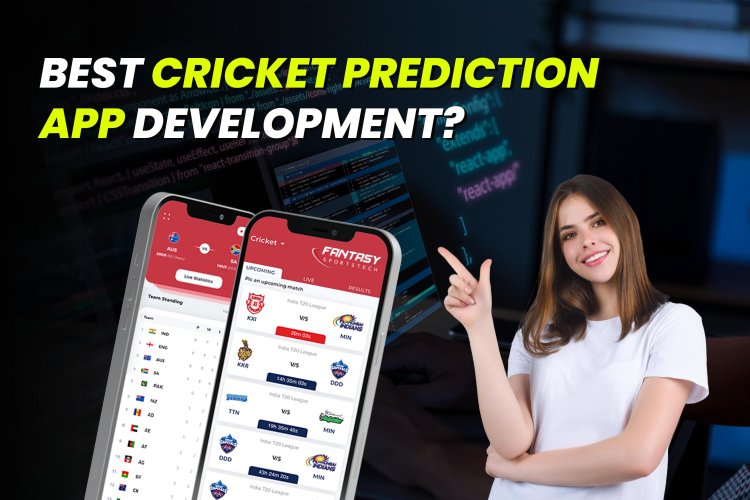
Best cricket prediction app development?
If you are diving into cricket prediction app development, you will want to focus on creating a user-friendly interface that keeps fans hooked! Start by integrating live match data and statistics to offer real-time predictions, enhancing the engagement factor. Using machine learning algorithms can help in predicting match outcomes more accurately based on historical performance and player analytics.
 Mera Template



Best Technologies for Developing Cricket Prediction Apps in 2025
2025 is seeing a huge increase in cricket prediction apps due to better data processing, artificial intelligence and user-focused features. Making sure an app performs and grows is possible only when the right technologies are chosen. Let’s see which types of tech are used by the best next-generation cricket prediction platforms.
- Backend Technologies:
For fast data analysis and plenty of users, Node.js and Python (Django or Flask) are widely chosen. With Node.js, processes happen fast thanks to events, whereas Python is helpful for creating AI-based and machine learning models. Using AWS Lambda, Google Cloud Functions or Azure Functions as cloud-native deployments ensures you get fast scalability and low costs.
- Frontend Technologies:
When making interfaces optimized for phones, developers are preferring React Native or Flutter. Thanks to both techs, developers can create apps that perform like natives on any platform, using fewer resources. People use React (for web) and Flutter (for mobile) most, mainly because their community is large and the components can be used again.
- Database Systems:
To get predictions instantly, the database system must perform rapidly. Firebase Realtime Database, MongoDB and PostgreSQL are all top options. Live data syncing and push notifications are most effective on Firebase.
- AI and Machine Learning are together called AI and Machine Learning.
For forecasts to be reliable, using AI is required. Train your model with TensorFlow, PyTorch or Scikit-learn, using information taken from previous matches, player information and weather records. Advanced analytics can be added to a system using APIs like those from OpenAI, Google and AWS.
- Web APIs & Source Datasets.
Use CricAPI, SportRadar or API Cricket to obtain quick updates about matches, players and scores. They guarantee your sales predictions can use information from both current and past data.
 Top Tech Stack for Cricket Prediction App Development
Selecting the right tools and technologies for your cricket prediction app in 2025 is necessary for good performance, the ability to scale up and higher accuracy. Let’s analyze what the perfect tech stack looks like:
Frontend:
App developers are better off with React Native or Flutter when making cross-platform mobile applications.
With React.js, you can build web interfaces quickly and make them respond well.
With these tools, developers design attractive and straightforward interfaces for Android and iOS.
Backend:
Node.js works very well for dealing with data that is processed in real time.
Python (either Django or Flask) fits well if you need AI or predictive analytics in your app.
Database:
MongoDB allows for flexible management of data that is hard to structure.
With Firebase, real-time updates and cloud syncing work great.
You can rely on PostgreSQL for your match and user data.
AI & ML Together:
TensorFlow, PyTorch or Scikit-learn are tools used to make predictive models using old stats.
AWS SageMaker and Google AI Platform are used for both building and deploying AI software.
These websites combine APIs and live data.
Use cricket data tools from CricAPI, SportRadar or API Cricket.
Update your feed instantly with WebSockets during live games.
Cloud & DevOps refers to:
You can deploy to AWS, GCP or Azure by using container services such as Kubernetes and Docker for your apps.
The use of this technology keeps your app responsive, adaptable to traffic and quick and knowledgeable—qualities every cricket prediction app requires in 2025.
Top Frameworks and Tools for Make Use of in Creating Cricket Prediction Apps
To ensure both accuracy and consistency, cricket prediction apps depend on the correct tools and frameworks. By 2025, developers are making use of current and powerful technology tools. Listed below are the most endorsed tools and frameworks for designers.
Frontend Frameworks:
With Flutter, an app made with Google’s technology works the same way for both mobile and web with only a single codebase.
React Native is cherished by developers for the quick and efficient way it allows them to develop apps suitable for any platform.
Backend Frameworks:
Node.js is effective for dealing with moving data and delayed requests when sports are live.
Django is an excellent framework for apps that make use of machine learning and have an organized backend.
What Data Science Tools Do We Use?
TensorFlow and PyTorch are commonly chosen to create prediction algorithms using both old and new match statistics.
For quick and simple development of machine learning projects, use Scikit-learn.
Integrating Data in Real Time
Firebase makes it possible to sync data immediately and is good for sending notifications and providing interaction with users.
Either Socket.io or Pusher can be used for sending updates quickly.
APIs:
Cricket fans will need CricAPI, API Cricket or SportRadar to get live scores, team information and details about players.
Additional Tools:
User predictions, scores and results of matches should be saved in PostgreSQL or MongoDB.
Using Docker to put applications into containers helps guarantee a smooth deployment everywhere.
Thanks to these tools, developers can build cricket prediction apps that operate quickly, can grow in size and are intelligent enough for the modern, sports-loving user.
A Developer’s Guide to the Best Technologies for Cricket Prediction Apps
Many people download cricket prediction apps which is most common during major tournaments and league games. In 2025, applications should be made with advanced technologies, going past basic functions to include speed, the ability to scale and intelligence. This article points out the essential technologies every developer should think about when constructing a cricket prediction platform.
Frontend Development:
Having a user interface that responds immediately and is simple to use matters a lot. Programming mobile apps for different platforms, React Native and Flutter are preferred choices. Writing the code just once makes it deploy on both Android and iOS, saving time and keeping the user experience the same. For websites built with the React framework, web apps continue to use React.js for its fast performance and easy component structure.
Backend Development:
Real-time data and a large amount of traffic must be handled well by the backend. Node.js matches the course goals by using an event-driven, non-blocking method. When data science or machine learning is needed, apps should be built using Python with Django or Flask. Using them allows developers to get products ready quickly and easily apply AI innovations.
In this course, we cover Machine Learning & AI.
Good predictions are made thanks to powerful AI. Build your predictive models by training them using historical match information, the form of the players, weather at the match and the state of the pitch. Both AWS SageMaker and Google Vertex AI make it fast and effective to build ML models.
Databases:
Select your database according to what the app requires:
Users sync their data live with Firebase and store it on the cloud.
For simpler predictions and tracking users, I use MongoDB.
Storing match schedules and team statistics in a relational way with PostgreSQL.
With APIs and real-time data, organizations are able to…
The supply chain can’t function without reliable and recent information. Grab live scores, important statistics and match reports with CricAPI, SportRadar or API Cricket.
Many companies are starting to use Cloud and DevOps to enhance their software development.
Twelvefold supports deployments of Docker and Kubernetes applications across AWS, Google Cloud or Azure. As a result, the site works well even when there is intense traffic on match days.

How to Earn With Your Cricket Prediction App
These apps not only please sports fans—when used smartly, they are a good way to make money. Here’s what you can do to generate reliable revenue from your cricket prediction app this year.
- In-App Advertisements:
Ads are one of the main ways people make money from their channels. Take advantage of platforms such as Google AdMob or Facebook Audience Network to put up banners, interstitials or video ads that give rewards. Check the number of ads you deliver to ensure it does not upset anyone.
- Freemium Model:
Let everyone use your app for free, but make some of the best features extra. You could get advanced predictions; skip ads; be the first to receive advice from pros; or explore valuable insights about upcoming matches. With this model, users don’t have to pay up front to see how the app works.
- Subscription Plans:
Provide a choice of regular subscriptions and include additional services. As an example, supply precise data on player achievements, future predictions made by AI or open up a range of premium contests. It is simple to add recurring payments using services such as Stripe or Razorpay.
- Collaboration & Become an Affiliate:
Make sports products, fantasy cricket leagues and related services available on your app and gain a commission from each one.
- Sponsored Content:
Connect with sports brands and betting platforms to feature their messages in your app. Avoid using anything that distracts your users.
- Fees for Entering the Contest:
Provide you are allowed, offer paid competitions where participants can win prizes. You have to pay a little to join and this means that anyone who wins gets some compensation.
Take user experience into consideration as you work on making money from the app. Having useful features and fewer ads leads to users staying loyal, enjoying themselves and the business growing for years to come.
My Contact Number is +91 95187 40169