


Readymade App vs Custom App Development.
When considering application development, the choice between readymade apps and custom app development is critical for aligning technological solutions with business objectives. Readymade apps, often available off-the-shelf, present a cost-effective and immediate solution, enabling businesses to deploy functional applications rapidly without extensive resource allocation.
 Mera Template
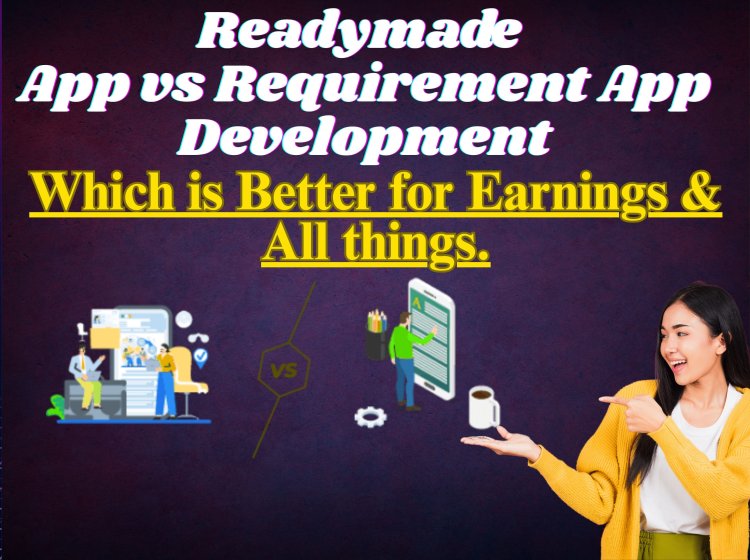



Readymade App vs Custom App Development: The Complete 2025 Guide.
In the fast-paced digital arena of 2025, businesses are dealing with one challenge from time in memorial: ready-made app or custom app development-which road to take? Both paths offer their own pros and cons, depending on what you want to achieve, when you want to achieve it and your budget.
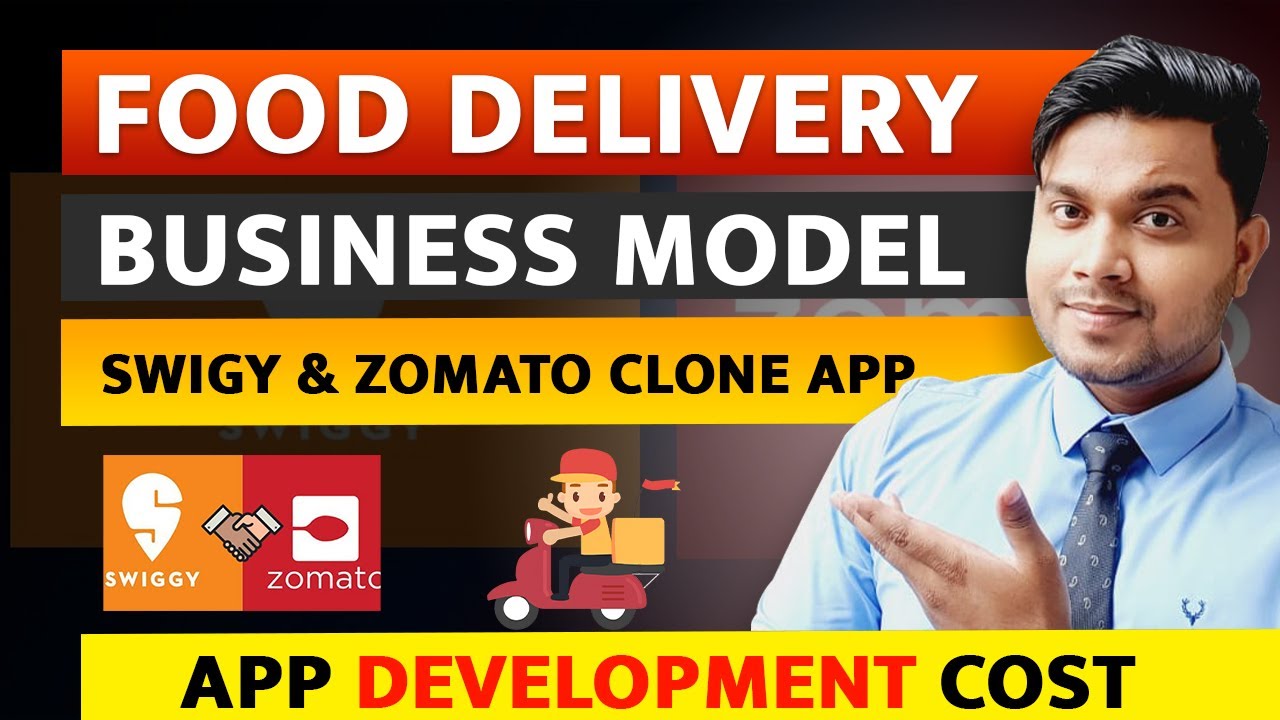
A ready-made app (also known as a white-label or off-the-shelf app) is a solution that has already been built and can be personalized and deployed in no time. These apps are generally less expensive to set up and include all standard features right away, which makes them a perfect solution for startups and small businesses interested in their early market entry. They are widely popular for food delivery, taxi booking, eCommerce, and fitness industries.

On the other hand, a custom (requirement-based) app is developed on the basis of business requirements from the scratch. These apps support more flexibility, scalability, and control over functionality, UX and brand. The up-front development time and cost are so much more, but the long term competitive advantage and features not shared by the competition do typically make up for that investment.

Cost of development is one of the major considerations. It could be a minimalistic app between $500 and $5000, that is already a “readymade” solution, or between $10,000 and $100,000, a fully custom one, depending on the complexity.
Advantages of Readymade Apps:
Lower cost and faster deployment
Tried-and-tested templates
Perfect for MVP or to test new concept
Disadvantages:
Limited customization
May look similar to competitors
Often dependent on third-party updates
Advantages of Custom Apps:
Tailored user experience
Maintain total control of features and appearance
More scalable as your business grows
Disadvantages:
Higher initial cost
Longer time to market
Requires continuous collaboration
At the end of the day, which you should choose comes down to your stage of business and what you want to achieve. If you value speed and budget, a ready-made answer could be the best choice. If differentiation, branding and the possibility of future scaling are important, then custom development is justified.
From Templates to Tailored: Which App Development Path Suits Your Business Best?
For any entrepreneur striving their hands on a mobile or web app, the first significant decision is to decide between a template-based (readymade) or custom (tailored) app development. Either route can be successful but is aimed at different businesses.
Ready-made apps are alredy developed platforms for quick launching. These solutions are low-cost, easy to implement and primarily aimed at general-purpose use cases such as food ordering, appointment scheduling and marketplace platforms. Ready-made solutions with little customization required are available from many SaaS providers and app stores.
Alternatively, custom app building is well-suited for companies with specific workflows, niche needs or long-term visions. Completely customized from the ground up, custom apps allow for total control over the design, performance, data management, and third party integration. They need more time and resources but they have a degree of flexibility and brand-building power few other advertising tactics can match.
How to Decide?
Ask yourself:
- Are you validating a new business idea or MVP? → Choose a readymade app.
- Do you need an app that can evolve along with your business? → Go custom.
- Are you time-pressured and budget-stricken? → Readymade is quicker and cheaper.
Would you like to have control over the code and functionalities? → Custom wins here.
Pros of Readymade Apps:
- Quick go-to-market
- Cost-effective
- Minimal technical involvement
Cons:
- Limited feature customization
- May not scale upward effectively with growth
Pros of Custom Apps:
- Complete control over UX/UI as well as backend
- Scalability and integration flexibility
- Competitive edge
Cons:
- More expensive, initial upfront cost and time consuming)").
- Needs continuous tech collaboration
In the end, there’s no one-size-fits-all answer. SMBs may see a potential win in using readymade apps to experiment with included functionality but both scale-ups and enterprises would do better going for a custom development to introduce out-of-the-box digital capabilities.
Ready-Made or Requirement-Based? Weighing the Benefits and Risks
With today's hectic pace of life, people and companies usually have to decide between off-the-shelf solutions and requirement-specific (custom) alternatives. Whether selecting software, business plans, interior designs, or even outfits, the choice can be critical to efficiency, expense, and enduring satisfaction.
Ready-Made: Rapid and Convenient
Ready-made solutions are pre-designed, pre-developed, and ready for instant utilization. These are off-the-shelf software, templates, prefabricated goods, or standardized services.
Advantages:
- Speed: No waiting period—you can utilize it at once.
- Lower Cost: Typically less expensive since the cost of development is distributed among numerous users.
-Proven Models: Tried and perfected through extensive use, typically with the help of an underlying community.
- Ease of Use: Accompanied by manuals, instructions, or vendor assistance.
Risks:
- Limited Flexibility: You need to adapt your requirements to conform to the product, vice versa.
- Scalability Issues: Unable to serve your future needs because your needs will have changed.
- Generic Fit: Not built for your specific objectives or issues.
This renders ready-made solutions perfect for startups, those with a limited budget, or short-term applications.
Requirement-Based: Personalized and Purpose-Built
Requirement-based solutions are purpose-built from the ground up or substantially customized to address particular requirements. They are typical in enterprise software, branding, architecture, or consultancy offerings.
Advantages:
- Tailored Fit: Designed to fit your precise goals, workflows, and audience.
- Scalable & Future-Ready: Flexible to accommodate future requirements and business expansion.
- Competitive Advantage: Custom solutions can provide a competitive edge over generic alternatives.
Risks:
- Greater Cost: More resources, time, and money are usually needed for custom development.
- Greater Delivery Time: Development, planning, and testing might take weeks or months.
3.Needs for Maintenance: Can need regular technical support and maintenance.
4.Requirement-based solutions are ideal for businesses with unique needs, long-term objectives, or a niche market.
The Right Decision
Your choice should be based on:
- Budget
- Urgency
- Complexity of your needs
- Long-term vs. short-term use
Occasionally, a combination solution—beginning with an off-the-shelf solution and then switching to a tailored one—is useful too. In summary, both requirement-based and ready-made solutions have their uses. Carefully weigh the benefits against the risks to select the most appropriate solution for your needs. Speed or specificity: your priorities will guide you to the correct choice.
My Contact Number is +91 9518740169